
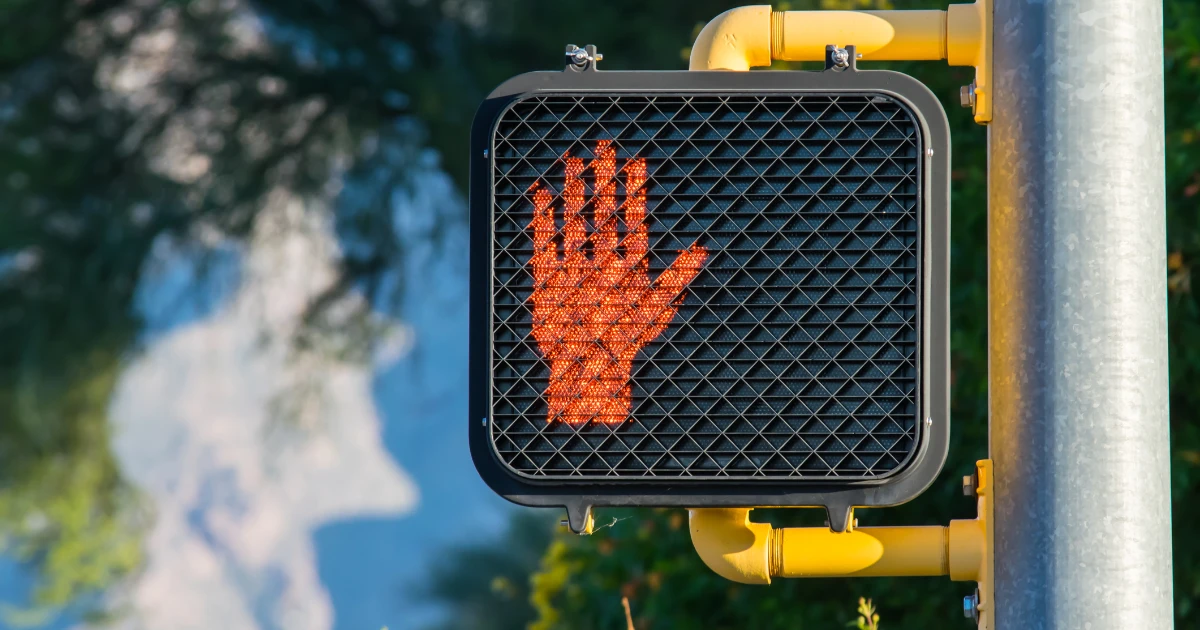

Compiling the most recent data on pedestrian injuries and fatalities across the Commonwealth, our legal team discusses Virginia pedestrian accident statistics and critical public safety challenges.
For injured victims, these figures may validate the reality of their physical and emotional trauma by confirming that theirs was not just an isolated incident. For safety advocates and policymakers, the data exposes systemic dangers on Virginia roadways and highlights the scope of this growing traffic safety problem.
If you were hurt in a pedestrian accident or need legal assistance, contact our team for a free consultation.
Virginia Pedestrian Accident Trends
According to Virginia Traffic Crash Facts, there were 1,747 pedestrian crashes in 2024, which is a 2.8% increase over the previous year. Other key pedestrian accident statistics from 2024 include:
- 1,719 pedestrian injuries—3.7% increase from 2023
- 130 pedestrian injuries on rural roadways—3.2% increase from 2023
- 1,589 pedestrian injuries on urban roadways—3.7% increase from 2023
However, there were fewer pedestrian fatalities in Virginia in 2024 than in 2023. There were 126 fatalities, a decrease of 5.3% from 2023.
In comparison, the Governors Highway Safety Association (GHSA) Pedestrian Traffic Fatalities Report projected 7,148 pedestrian deaths in the United States in 2024. This represents a 4.3% annual decrease in fatalities.
The Most Dangerous Streets and Intersections in Virginia
High-density metropolitan corridors and complex shopping districts represent the highest-risk environments for pedestrian accidents in Virginia. Local traffic analysis and police reports reveal risk concentrations at specific intersections and arterial roads, including:
- Richmond Highway (Route 1) Corridor, Fairfax County: Logged 11 pedestrian deaths or serious injuries in 2024, particularly at Huntington Avenue
- Broad Street from 1st Street to 14th Street, Richmond: Part of a commercial network that contributed to 13 citywide pedestrian fatalities
- Pacific Avenue, Virginia Beach: Pacific Avenue (US 60) was included in the crash cluster analysis published by the Virginia Department of Transportation (VDOT).
- Orange Avenue (Route 460)/Melrose Avenue: Marked as a priority to improve pedestrian safety by the Roanoke Valley Transportation Planning Organization. A survey by Project Pipeline confirmed resident concerns for pedestrian safety and other traffic issues.
Why Are Pedestrian Accidents on the Rise?
Crashes involving pedestrians in Virginia may be on the rise due to several factors, including:
- Speeding and aggressive driving: Higher speeds or careless maneuvering can reduce driver reaction time, making it difficult for a speeding driver to avoid a pedestrian.
- Distracted driving: According to the National Highway Traffic Safety Administration (NHTSA), taking your eyes off the road for only five seconds is like driving the length of a football field with your eyes closed. Drivers who text or look at their phones can easily overlook a pedestrian.
- Impaired driving: Intoxication by motorists or pedestrians significantly impairs depth perception and judgment, thereby increasing collision rates.
- Vehicle type: The growing consumer preference for larger SUVs and light trucks can make it more difficult to see pedestrians, as their higher front-end profiles may block visibility.
- Road design: High-speed, multi-lane roads frequently lack essential pedestrian safety features, such as walking signals, crosswalks, and adequate street lighting.
Who Is Most at Risk and When?
Although a pedestrian accident can happen to anyone at any time, pedestrian crash risks tend to concentrate on specific demographics, location, and times, including:
- Age: Adults aged 21 to 25 account for the highest total number of pedestrian injuries in Virginia. However, adults over the age of 70 are disproportionately vulnerable, suffering higher mortality rates due to physical fragility. This older age group accounted for 15.1% of all Virginia pedestrian deaths.
- Gender: According to NHTSA, males face a dramatically higher risk, making up about 70% of all pedestrian traffic fatalities nationwide.
- Location: About 84% of all pedestrian accidents happen in urban areas, while only 16% occur in rural areas. However, 74% of pedestrian fatalities occur outside of intersections.
- When: The majority of pedestrian fatalities happen when it’s dark, accounting for 77% of total deaths, while the remainder of fatal pedestrian crashes happen during daylight, dusk, or dawn.

Common Injuries From Pedestrian Accidents in Virginia
Pedestrians lack vehicle safety protections, making them highly vulnerable to severe physical trauma. With 1,719 pedestrian injuries reported in Virginia in 2024, they often include:
- Head injuries: Impacts against pavement, vehicles, or other structures may cause traumatic brain injuries (TBIs), skull fractures, or cognitive issues.
- Spinal injuries: Serious force can compress vertebrae, causing nerve damage or paralysis.
- Broken bones: The collision can fracture legs, hips, or pelvis, often at the bumper’s primary strike point.
- Soft tissue damage: Victims may face extensive skin lacerations, ligament tears, and severe contusions.
- Internal injuries: Internal bleeding and ruptured organs that can pose immediate life-threatening risks.
- Psychological trauma: Survivors may experience long-term post-traumatic stress disorder (PTSD), anxiety, and depression.
- Permanent disability: Many victims suffer from cognitive impairments or physical disabilities, permanently changing their ability to work or live independently.
How Cooper Hurley Injury Lawyers Helps Pedestrian Accident Victims
If you or a loved one suffered injuries in a Hampton Roads pedestrian accident, Cooper Hurley Injury Lawyers is ready to help. We’re The Car Crash Experts because injury law is all we do, with over 120 years of combined legal experience and record-setting case results won in Virginia.
We know Hampton Roads and what is important to its residents, offering individualized legal representation and outstanding client service to the community. Call (757) 333-3333 or contact us online to schedule your free, confidential consultation with a pedestrian accident lawyer at one of our locations:
FAQs: Virginia Pedestrian Safety Questions
Why Are Pedestrian Fatalities Increasing?
Many factors may contribute to increasing pedestrian fatalities, such as speeding, distracted driving, and unsafe road design. If you lost a loved one, you can work with a Virginia pedestrian accident attorney to determine what happened and pursue financial relief for what you’ve been through.
I Was Hit by a Car in Virginia. What Should I Do?
If you were injured as a pedestrian, immediately seek medical attention for your injuries and call the police to document the accident and create an official report. If you can, collect the driver’s and any witnesses’ contact information, take photos of the scene, and consult a personal injury attorney for guidance.
Is Virginia Above or Below the National Average for Pedestrian Deaths?
Virginia falls slightly below the national average for pedestrian fatalities per capita. According to NHTSA data, the Commonwealth ranks 33rd in the country with a pedestrian fatality rate of 1.48 per 100,000 people, compared to the higher nationwide average.
What Is the Role of Alcohol in Pedestrian Accidents?
Alcohol is a major contributing factor in pedestrian accidents, significantly impairing the judgment, reaction times, and spatial awareness of both drivers and pedestrians. However, in Virginia pedestrian accident statistics, the most drastic change was seen in the number of drinking pedestrian fatalities in 2024, with a 25.8% decrease from 2023.
How Does Speed Affect Pedestrian Injury Severity?
Higher vehicle speeds can drastically increase pedestrian injury severity because the force of impact multiplies exponentially with speed. A pedestrian hit at 40 miles per hour may face a significantly higher risk of death or severe injury compared to one hit at lower speeds.